
Is pepperstone-ai.org a scam?
'LIKELY SCAM'
Risk: HIGH
Website Screenshot
Overview
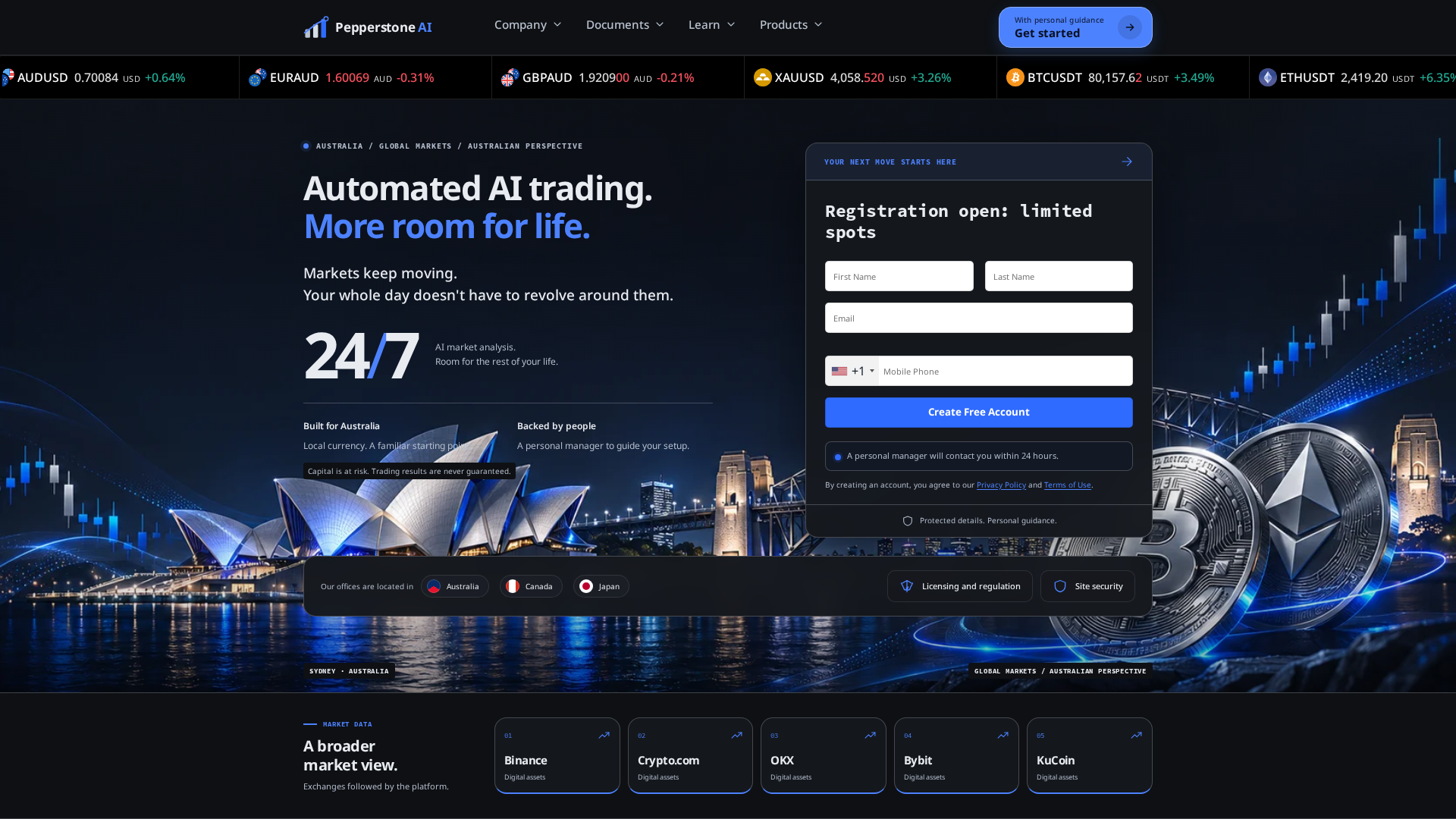
This page displays numerous high-confidence, hallmarks of a pig-butchering crypto scam, centering on an AI-trading platform for Australians. Key signs include a fake legacy claim, new domain, aggressive personal onboarding, unverifiable credentials, and multiple mimicry and KYC-theater elements.
Why We Think This Is A Scam
Fake legacy claim: site says 'Pepperstone AI has worked with Australian clients since 2021,' but domain was registered '1 day' ago.
Rampant KYC/AML theater: claims of Australian AML/identity compliance, but no evidence of regulation or a company registry number.
Slick pseudo-corporate branding, with unverifiable team/customer names and testimonials, hinting at fabricated social proof: e.g., 'Six accounts from Australians... Dean Kershaw, Chloe Bassett, etc.'
Mimics a legitimate, unrelated financial brand ('Pepperstone' is a regulated entity, but this site is not), indicating deliberate impersonation tactics.
Aggressive personal onboarding ('personal manager will contact you within 24 hours', 'no documents are needed to create the account') matching classic pig-butchering workflows.
Unrealistically streamlined access: no documents to open account, start trading within a week with personal assistance, targeting first-time investors ('no previous trading experience needed'), again matching pig-butchering models.
Claims of 'AI-powered' trading and 'automated strategies'—prominent crypto scam narrative.
Withdrawal assurance language designed to falsely build trust ('withdraw profit at any time from $370 AUD deposited', 'withdrawals only go to accounts and wallets verified in your name'), typical for scam sites.
No verifiable company registration, despite claims of offices in multiple countries, and the provided Australian address is simply generic and unverified.
Heavy emphasis on personal contact/chat (Telegram, 'personal manager', direct calls), another hallmark of pig-butchering operations.
Stay Protected
Get real-time protection while browsing. Our Chrome extension helps protect against scams and phishing attacks.
Add to Chrome
Quick Actions
Registration Info
Registrar:Hosting Concepts B.V. d/b/a Registrar.eu
Registered:2026-11-03
Hosting Info
Provider:Cloudflare, Inc.
Location:US
Help Others Stay Safe
Get protected and share safety tips with your community. Together, we can make the internet safer.